

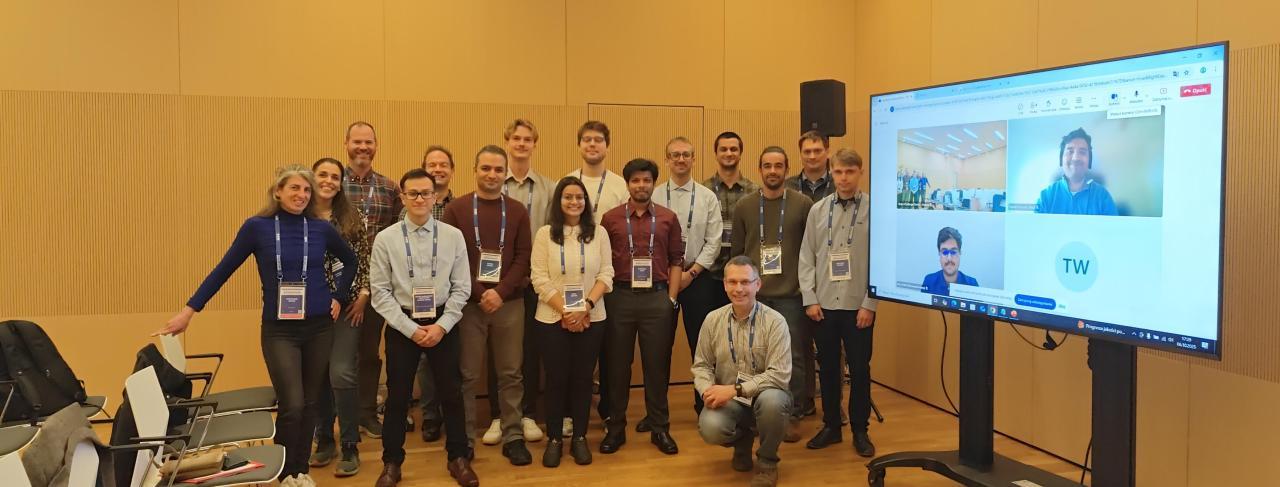
The 2025 Radar Challenge took place at the 2025 IEEE Radar Conference in Krakow, Poland, and was organized by the AESS Radar System Panel with the great support of Analog Devices and MathWorks.
Continuing with the tradition of the Challenge, different teams had the opportunity to practice and showcase their skills with state-of-the-art radar hardware, specifically the Phaser 10 GHz Phased Array Radar platform from Analog Devices. This is a low-cost, simplified phased array radar that allows real beamforming hardware to be used for education, research activities, and even software development in MATLAB or Python.
Within this edition of the Challenge, each team of participants was asked to submit a proposed plan of activities in November 2024, and 10 teams were selected to receive one Phaser kit and support from the Analog Devices and MathWorks teams to develop their proposal further. Eventually, eight teams made it to the final stage at the 2025 IEEE Radar Conference and presented their work with a public presentation and Q&A session.
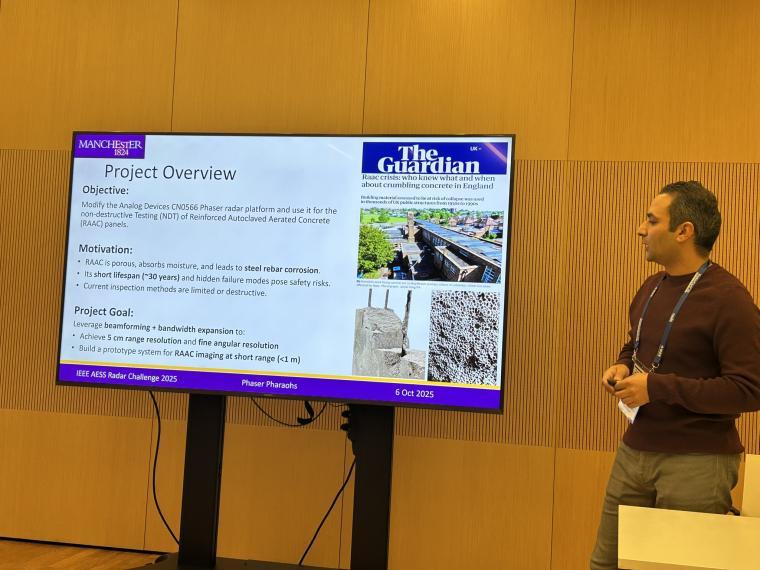
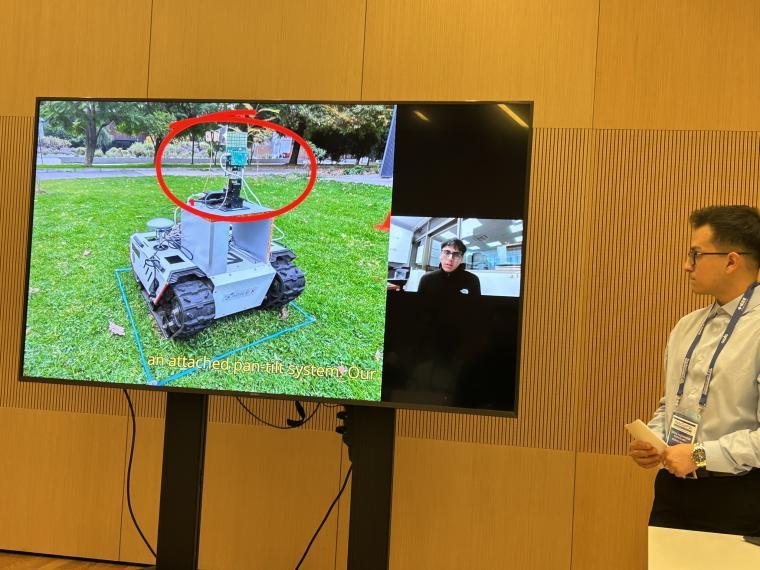
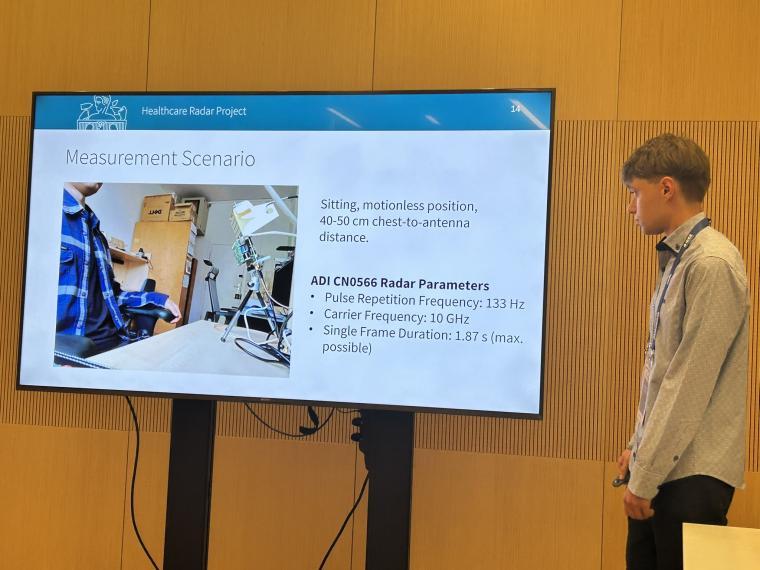


2025 Teams
A panel of judges from the AESS Radar System Panel scored the work of the eight teams based on criteria such as creativity, technical depth, clarity and completeness of the presented material, and answers in the Q&A session.
The three top teams were:
1st Place: Tarun Cousik and Rohit Rangaraj, Virginia Tech, for their work on Practical MVDR-SMI on Hybrid Beamformers (HBF)
2nd Place: Kamal Khalil, Samuel Forester, Frank Podd, and Tony Peyton, University of Manchester, for their work on High-Resolution FMCW Radar for Non-Destructive Testing
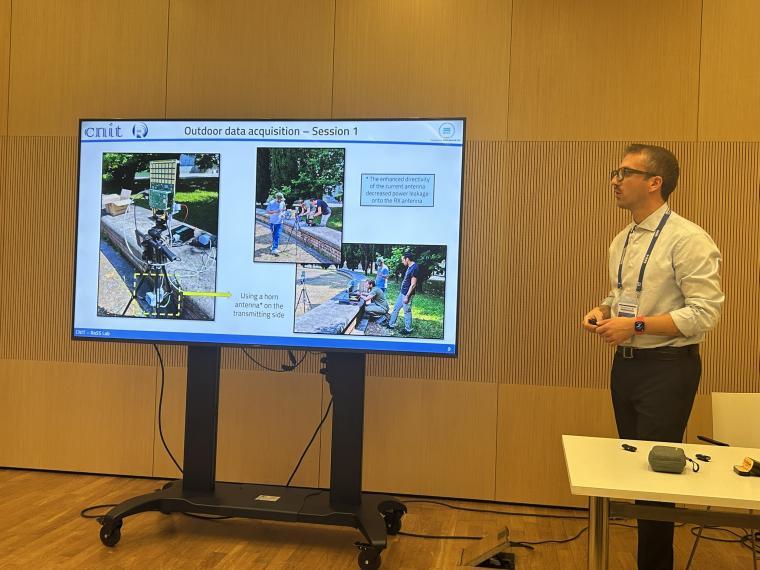
3rd Place: Francesco Mancuso, Giulio Meucci, Ajeet Kumar, Saba Kharabadze, and Bhaskar Ahuja, CNIT RaSS Italy, for their work on a Complete System with the ADALM-PHASER with Signal Processing and UI Integration
It is important to acknowledge the good work done by all teams, especially considering the diversity of backgrounds from undergraduate students to teams of PhDs and postdoctoral candidates. We are also proud of the geographical diversity of the competing teams, from Poland to the US, from the UK to Chile, Italy, India, Luxembourg. Well done therefore to all the groups for their impressive performance!
The next edition of the Challenge will take place at the 2026 IEEE Radar Conference in Phoenix, AZ, in May 2026.