

The History Column: Basil Schonland and Stanley Hey

In February 1942, a young physicist, Stanley Hey, found himself saddled with a task that seemed, on the surface, to be extremely mundane. At the time Hey was working in the British Army Operational Research Group (AORG) under the command of Colonel Basil Schonland, FRS. Schonland, a South African physicist, had a world-renowned reputation as an expert on radio detection of lightning. Soon after South Africa entered the war in September 1939, he formed a highly-secret group at the University of the Witwatersrand in Johannesburg with the intention of building an elementary radar in order, as Schonland put it, to ‘learn the technique’. Within three months they had succeeded and their 90 MHz radar received its first echoes.
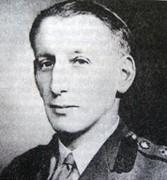
Sir Basil Schonland, FRS.
In 1941 Schonland went to England on a mission to increase the supply of British radars to South Africa. He never returned home because his services were in great demand by Professor John Cockcroft, then running the Air Defence Research and Development Establishment (ADRDE). He needed a deputy and he appointed Schonland. The ADRDE became the Army Operational Research Group (AORG) and among the many physicists who applied their minds to the problems of modern warfare was Stanley Hey.
During the night of 11/12 February 1942 three German battlecruisers, Scharnhorst and Gneisenau and the heavy cruiser Prinz Eugen made a daring escape from the French port of Brest where they had been undergoing major repairs. By dint of brilliant seamanship, and with the help of murky weather, they made it through the English Channel to their home ports in Germany undetected by British radars. The Germans had been ramping up their jamming of those coastal defence radars in a very controlled way over a period of weeks so as not to alert the enemy to the increasing broadband noise. This audacious German naval action and the inability of British forces to prevent it has become known as the Channel Dash. Schonland’s AORG was ordered to take control of all coastal defence radars and Hey was assigned to the task of tracing the source of the jamming.
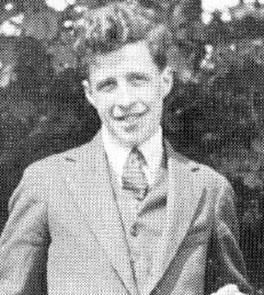
Stanley Hey.
He set up what was called the J Watch, involving logging and reporting all interference with the radars. Over 26/27 February severe jamming was experienced. Intriguingly, it subsided completely at nightfall. And the source was apparently moving. To some this suggested an airborne jammer but Hey soon deduced that there was another far more likely source: It was the Sun because a massive sunspot group had been transiting the solar disc on those days, and therefore the ‘jamming’ was actually the noise from this solar storm. Hey immediately reported this to Schonland. ‘Is that so, Hey?’, said Schonland. ‘How interesting. Did you know that Jansky of Bell Labs in the USA discovered radio noise coming from the Milky Way?’ Schonland then told him of Jansky’s work in 1932 which had very much underwhelmed the American astronomy community at the time, though its subsequent ramifications were huge.
Restrictions prevented Hey from publishing his findings till after the war. But that did not deter the sceptics among his own colleagues who loftily informed him it was well-known that the Sun was a thermal source radiating according to Planck’s law. How wrong they would soon prove to be ! Hey’s discovery was undoubtedly the beginning of radio astronomy in the UK.
Further information may be found in:
- Austin, B.A., ‘Radar in WW2: The South African contribution’, IEE Engineering Science and Education Journal, June 1992.
- Austin, B.A., Schonland; Scientist and Soldier, Taylor and Francis, 2001.
- Hey, J.S., Solar radiations in the in the 4-6 metre radio wave-length band, Nature, Vol.157, pp47-48, 12 January 1946.
- Hey, J.S., The Evolution of Radio Astronomy, Elek Science, London, 1973.
Authored by Brian Austin
Retired from the Department of Electrical Engineering and Electronics, University of Liverpool.